
By Ashburn Resto · September 30, 2026
If the pit has already overflowed, read our sump pump failure cleanup page for what the cleanup involves. Basement seepage is a common call on the Chantilly water damage page too.
Backup options ladder
| Option | Runs without power | Main limit | Upkeep |
|---|---|---|---|
| Battery backup pump | Yes, for hours | Battery drains in a long outage | Test and replace the battery |
| Water-powered backup | Yes, as long as water pressure holds | Needs municipal water, no well | Test annually |
| Generator | Yes, with fuel | Needs fuel and someone to start it | Run monthly |
| Alarm only | Warns you | Does not pump | Replace the battery |
Why the pump stops when the power does
Most sump pumps are electric. When a storm takes out the power, the pump stops at the same moment the pit starts to fill fastest. A storm that causes an outage is also the storm that pushes groundwater against the foundation, so the failure happens at the worst time.
A backup is not a luxury in a finished basement. It is the thing that decides whether you spend the night moving furniture.
Battery backup pumps
A battery backup pump sits in the pit beside the main pump. When the main pump loses power or fails, the backup runs on a deep-cycle battery. A good setup keeps a pit under control for several hours of pumping, and fewer hours in a heavy flow.
Check the battery rating and the label for run time. Test the system by unplugging the main pump and pouring water into the pit. Replace the battery on the schedule the maker gives, even if it still seems fine.
Water-powered backups
Water-powered pumps use municipal water pressure to create suction and move water out of the pit. They do not need electricity or a battery. They need steady water pressure and a connection to a municipal supply, so they do not work with a private well.
They also use water, sometimes a lot of it, as they run. If you are on a metered supply, ask a plumber what to expect.
Generators
A portable or standby generator can keep the main pump and other circuits running. Portable units need fuel and someone home to start them. Standby units start on their own, but they cost much more.
Never run a generator in a garage or basement. It produces carbon monoxide and must run outdoors, well away from doors and windows.
Before the next storm
Clear the discharge line and check that the outlet is not buried or iced. Test the float. Test the backup. Add a high-water alarm so you know when the level is rising. Raise valuables off the basement floor.
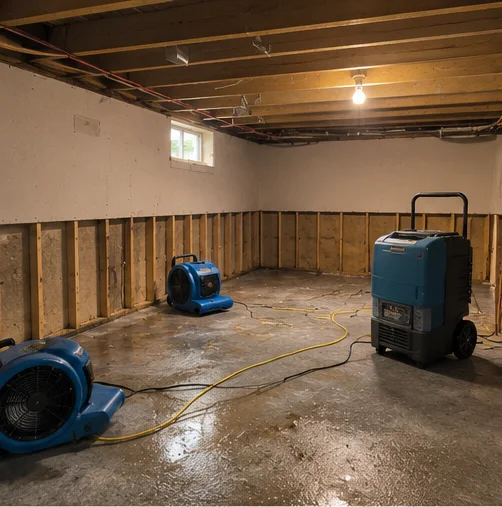
If the pit does overflow, call a restoration crew while the water is still shallow. Groundwater is Category 2 at least, and the pad and carpet are the first things to go.
Questions to ask before you buy a backup
- How many hours will it run at my pit inflow?
- Does it fit in my pit next to the main pump?
- Does it have an alarm and a battery monitor?
- How do I test it, and how often?
- What happens when the battery is low?
- Who installs and services it?
A plumber or sump specialist can answer these for your pit. Bring the make and model of your main pump, the size of the pit and a rough idea of how often the pump runs during storms.
What a failed backup looks like
A backup that fails often fails quietly. The battery is dead, the float is stuck or the check valve is wrong. You do not know until the storm. Testing matters more than buying.
Once a year, unplug the main pump and pour water into the pit to see the backup run. Write the date on the battery. A test in April is better than a surprise in July.
A realistic storm scenario
Say a thunderstorm drops two inches of rain in an hour. The pit starts to fill quickly, and the main pump runs without a break. Then a tree limb takes down a power line, and the lights go out. With no backup, the pit fills in minutes and spills across the floor.
With a battery backup, the second pump takes over, and the water level stays under control. The battery may carry you for several hours, enough to get through the worst of the storm and give the utility time to restore power.
If the outage runs longer, you have choices. You can swap the battery, run a generator outdoors to charge it or call for help to pump out the pit. Having a plan beats improvising in the dark.
Sizing and placement
A backup pump should be matched to the pit. Many pits are about 18 inches across and 24 inches deep, and the backup has to fit beside the main pump without jamming the floats. A plumber can check this in a few minutes.
Place the battery and charger above the floor, since a flooded battery is no use. Run the backup discharge to a separate line if you can, so a clog in one does not stop both pumps.
Keep reading
Read it before you decide what to throw out, so see what can be saved in a flooded finished basement. Sump pit water starts at Category 2, and this shows why, so see clean, gray and black water explained.
Quick answers
BasementHow long does a battery backup last?
It depends on the battery and the inflow. Several hours of steady pumping is common, and less in a heavy flow. Check the label and test it.
InsuranceDoes insurance cover a backup pump failure?
Often only with a sump or water backup endorsement. General information only. Check your policy.
SafetyCan I run a generator in the garage?
No. Generators must run outdoors because of carbon monoxide.
Pump stopped and the pit is rising. Call us now.
Call (571) 760-4517