Services grouped by what you need
| Need | Services |
|---|---|
| Stop it | Frozen and burst pipe cleanup, water heater and appliance leaks and ice dam and roof leaks |
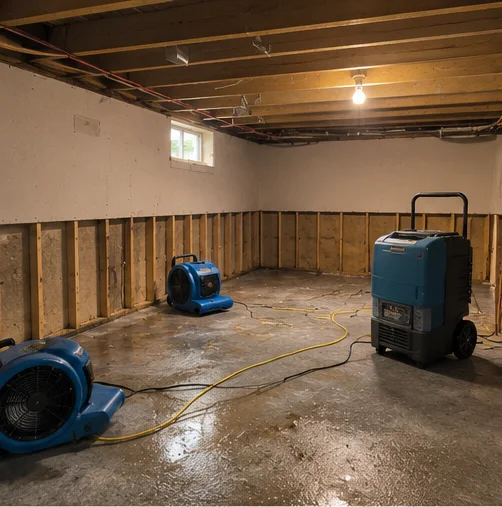
| Remove it | Flooded basement cleanup, sump pump failure cleanup, sewage backup cleanup and storm and flash flood water |
| Dry it | Structural drying, carpet water extraction and hardwood floor water damage |
| Find it | Water leak detection and mold removal |
| Rebuild it | Water damage repair and commercial restoration |
Every service in one place
Water damage rarely arrives as one problem. A burst pipe means water extraction, then drying, then often a rebuild. A hidden leak needs detection before anyone can dry anything. This page groups our services by what you need next.
Pick the one that matches your situation. If you are not sure, call and describe what you see. We will tell you which page and which steps fit, and what to do while you wait.
How most jobs move through our services
- Stop the source. Pipe, appliance, roof or drain, and the main valve is closed.
- Remove the water. Extraction takes standing water and soaked material out.
- Dry the structure. Equipment runs until readings match dry.
- Check for mold. We look for growth and treat it if we find it.
- Rebuild. Drywall, trim and flooring go back.
Which service by season
| Season | Common service |
|---|---|
| Winter | Frozen and burst pipe cleanup |
| Spring thaw | Sump pump failure cleanup |
| Summer storms | Storm and flash flood water cleanup |
| All year | Appliance and water heater leaks |
How to choose the right page
If water is moving right now, start with the source. A frozen or burst pipe, a failed appliance, a leaking roof and a sump pump failure each have their own page with first steps. If the water has stopped and you are looking at damage, start with the room. Our flooded basement, carpet and hardwood floor pages show what usually survives and what does not.
If you cannot see water but smell damp, the leak detection and mold removal pages explain how we find and handle hidden problems. If the room has been torn open and you are ready to rebuild, the water damage repair page covers what comes next.
What every job includes
- Moisture readings at the start and at the finish, plus daily during drying.
- Photos of the damage and the work, which you can share with your insurer.
- A plain explanation of what we found, in the words you would use at the kitchen table.
- A written scope of what comes out and what goes back.
- A 24-hour emergency line for the first call.
Residential and commercial
Most of our calls are from homeowners in Ashburn and the neighboring towns, and they involve finished basements, townhomes and single-family houses. We also handle small commercial buildings, such as offices and retail space, HOA buildings and flex space. See the commercial page for property types and how drying is planned around business hours.
We do not handle data centers or server rooms. Those spaces have specific requirements and we leave them to firms that specialize in them.
Seasonal patterns worth knowing
Winter brings frozen pipes and ice dams. Spring thaw and heavy rain stress sump pumps. Summer storms bring flash flooding and power outages that shut pumps off. Appliance and water heater leaks happen all year, and often get found late because they start slowly.
Knowing the season helps you prepare. A hose bib shutoff in November costs nothing. A sump pump test in March takes five minutes. Both are cheaper than the cleanup.
Common first questions on the phone
When you call, we usually ask where the water is, how long it has been there and what it came from. We ask whether you have shut off the main and whether the power is off in the wet area. These answers tell us how fast to move and what equipment to bring.
We may also ask about the age of the house and whether the basement is finished. Both change the plan. Older houses may have different materials, and finished basements always have more to remove.
Get ready before you call
A few details speed up the first call. Know your address, the time the water started and where it seems to be coming from. Know whether the main is off and whether the power is off to the wet area.
Have a photo or two ready if you can take them safely. If you are reaching us about a condo or townhome, have the property manager or association contact handy. These details let us move faster and ask better questions.
Seasonal checks that save money
A short check each season catches most problems early. In fall, drain hose bibs and test the sump pump. In spring, look at the basement walls after thaw. In summer, watch humidity and clear window wells. In winter, keep the heat steady and watch the forecast.
Common questions
CostDo I need to know which service I need before I call?
No. Describe what you see and we will sort out which services apply and what to do first.
InsuranceDo you handle insurance claims?
Readings and photos from the job are yours to share with your insurer. Your claim stays between you and your insurer.
CostWhere can I see typical prices?
See our pricing page for an estimator with typical ranges. Your price is set after inspection.
Not sure which service fits? Call and describe what you see.
Call (571) 760-4517