
By Ashburn Resto · September 16, 2026
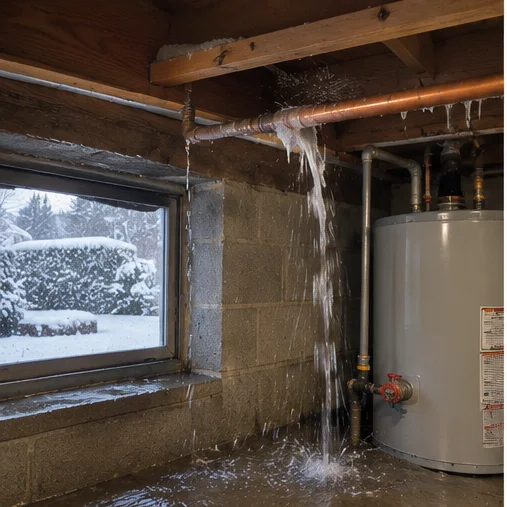
Once the water is stopped, the cleanup work is described on our flooded basement cleanup page. Finished basements in Broadlands and nearby are where a burst line tends to do the most damage.
The first hour clock
Stop the water first
The main shutoff is usually where the water line enters the house, often in the basement or a utility closet, and sometimes outside near the meter. Turn the valve fully. Then open a faucet at the lowest point in the house to drain the line, which lowers the pressure behind the split.
If you cannot find the valve, the meter box near the street often has a shutoff that needs a special key. Knowing where these are before an emergency saves minutes that matter.
Deal with electricity carefully
Water and power do not mix. If water is dripping through a ceiling with light fixtures, or covering outlets, turn off the breaker for that area, but only if you can reach the panel without standing in water. If the panel itself is wet or you cannot reach it safely, stay out and call your utility or an electrician.
Do not use a household vacuum on standing water, and do not plug anything in on a wet floor. A shop vacuum rated for wet use is a different tool, but it is no match for a flooded basement.
Record the damage
Take photos and a slow video of every wet area before anything moves. Include the source if you can see it, the water line on walls and any damaged belongings. Time-stamped photos help later when an insurer asks what happened.
Then lift small valuables, electronics and papers onto a table or shelf. Put aluminum foil or plastic blocks under furniture legs on wet carpet to stop stains.
Make the calls
Call a restoration company early. Water that is out of the pipes is easier to deal with in the first hours than the next morning. Call your insurer to open a claim and ask what they want from you. If you rent or live in an HOA building, tell the landlord or the association too.
Call a plumber to fix the pipe. Water extraction and plumbing are two different jobs, and they can run side by side.
What to leave alone
Do not tear out drywall or carpet before the crew arrives unless you have to for safety. Do not use heat to dry the room quickly, since it can harm wood. Do not ignore a sagging ceiling. Water can pool above it, and it can collapse.
If the water is coming from a frozen pipe that has not yet thawed, expect more water when the ice melts. Stay near the valve.
What we ask on the phone
When you call us, we ask where the water is and whether the main is off. We ask how long it has been running and which floors are wet. We ask whether the power to the wet area is off. Those answers tell us how fast to move and what equipment to bring.
We may also ask about the age of the house, because older plumbing and finished basements change the plan. Answer plainly and say what you do not know. A guess that turns out wrong is fine, as long as we know it is a guess.
Keep a simple log
Write down the time you found the water, the time you shut the main and the time you called us and your insurer. Note anything you moved or threw away. A simple log on a phone is enough.
A few weeks later, when an adjuster asks what happened and when, the log saves you from trying to remember. It also helps us tell the story of the loss accurately in our job file.
If you have a smartphone, take a short video walking through each wet room and say what you see out loud. It captures details you might miss in photos, such as where water is dripping and how fast.
Special cases
If the water is coming through a ceiling, put a bucket under the drip and poke a small hole at the lowest point of a bulge to relieve the water, but only if you are standing clear of the area and the ceiling is not sagging badly. If it is sagging, stay away and call.
If the leak is in an upstairs bathroom, shut the fixture valve and the main, and lift rugs. If you live in a condo or townhome, tell your neighbors below and the association as soon as you can. They may already have water coming in.
If you are away from home when you learn about a leak, call a neighbor or the person with the key. Ask them to shut the main and to take photos. Do not drive into flood water to get home.
Keep reading
Prevention costs far less than the first hour of a burst, so see how to keep pipes from freezing in an Ashburn home. It explains why the source of the water changes what gets removed, so see clean, gray and black water explained.
Quick answers
SafetyIs it safe to walk through water in the basement?
Only after the power to that area is off. If the breaker is across a wet floor, stay out and call.
InsuranceShould I call my insurer before I call a restoration company?
Call the restoration company first if water is still spreading, then call your insurer. Both calls should happen within the first hour.
BasementCan I start drying the room myself?
You can open windows and move belongings. Real drying needs equipment and readings.
Pipe burst right now? Call while you shut the valve.
Call (571) 760-4517