
By Ashburn Resto · September 9, 2026
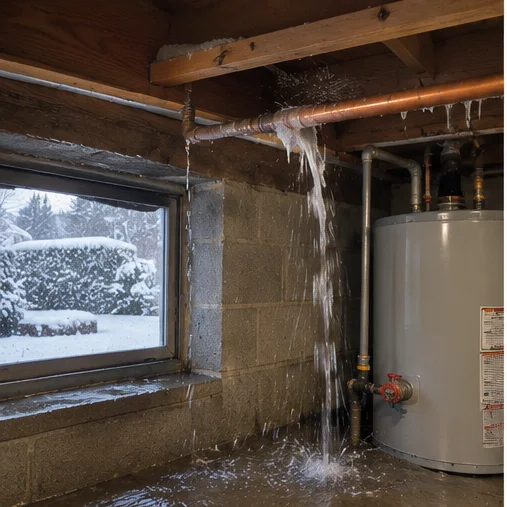
If a pipe has already split, our frozen and burst pipe cleanup page explains what the crew does, and the Herndon water damage page covers townhomes where one burst can reach a neighbor.
The freeze-night timeline
Know where your pipes are exposed
Most frozen pipes in a Northern Virginia house are in the same few places. Hose bibs, the line to a kitchen sink on an exterior wall, supply runs over a garage ceiling and anything in a crawlspace or attic top the list. Walk the house once in the fall and write down where those pipes are.
Pipes in an interior wall rarely freeze, because the house keeps the wall warm. A pipe that sits against cold sheathing with thin insulation is the one that gets into trouble, especially when wind finds a gap in the siding.
Do the fall chores early
Disconnect every hose from every hose bib before the first hard frost and store them. A hose left attached traps water in the bib and in the pipe behind it. If your bib has its own shutoff valve inside the house, close it and open the bib to drain.
Add pipe insulation to lines in the garage, attic and crawlspace. Foam sleeves are inexpensive and take minutes to install. Seal gaps where cables, dryer vents and pipes pass through exterior walls with caulk or spray foam, since even a small gap can freeze the pipe beside it.
On the coldest nights
Open the cabinet doors under sinks on exterior walls so room heat reaches the pipes. Let the faucet drip, hot and cold, on the tap farthest from where water enters the house. Moving water is harder to freeze, and a drip also relieves pressure if ice forms.
Keep the thermostat steady. A setback to save energy overnight is the wrong move on the coldest night. If the garage has pipes in the ceiling, keep the door closed and consider a safe heat source rated for the space.
When you travel
An empty house is the biggest risk. Set the thermostat to at least 55°F, open the cabinet doors and ask someone to look in during a cold snap. If you will be gone for a long stretch, a plumber can shut off and drain the system.
A water leak sensor near the water heater, the washer and under the kitchen sink sends an alert to your phone, which helps most when you are away. Know where the main shutoff is, and make sure whoever checks the house does too.
If a pipe freezes anyway
Open the faucet and warm the pipe slowly with a hair dryer, starting near the tap and working toward the frozen section. Never use an open flame. If you see a split or hear running water, shut off the main and call a plumber and us. The thaw is when the leak begins, so stay close.
Mistakes that cause frozen pipes
The most common mistake is setting the thermostat back at night to save energy on the coldest night of the year. The house cools, the wall cavities cool faster and a pipe against the exterior sheathing starts to freeze. Another is leaving a hose on the bib because you plan to use it again soon.
A third is closing off a room or a basement and turning the heat off there. Pipes in unheated rooms freeze first. If you close off a room, keep a little heat flowing and open the door to the rest of the house on a hard freeze.
A fall checklist for Northern Virginia homes
- Remove and store garden hoses and splitters.
- Close and drain hose bib shutoff valves inside the house.
- Insulate exposed lines in the garage, crawlspace and attic.
- Seal gaps around penetrations in exterior walls.
- Check that the heat works in every room with plumbing.
- Find the main shutoff and test that it turns.
- Put a water sensor under the kitchen sink and near the water heater.
Take twenty minutes in October and walk the house with this list. It costs far less than a burst pipe in January, and it tells you where your weak points are before a cold snap does.
Why local houses are exposed
Many houses here have a finished basement under a main floor, with the garage tucked into the footprint. That puts supply lines in garage ceilings and in exterior walls next to unheated space. A kitchen sink on an outside wall may have only a thin layer of insulation behind it.
Builders in this area design for a climate that is mild most of the winter, so a few cold nights a year catch people off guard. The risk is real but short, which makes prevention cheap if you do it on the right nights.
Watch the forecast for lows in the teens or low twenties, and for wind. Wind drives cold into wall cavities and makes a marginal pipe fail. Treat a windy night at 22°F as more dangerous than a calm night at 18°F.
Keep reading
Save this one for the night you need it, so see what to do in the first hour after a pipe bursts. The most common hidden failure on a cold night, so see why frost-free hose bibs still split inside the wall.
Quick answers
WinterShould I leave the water dripping all night?
On the coldest nights, yes, at a pencil-lead rate on the tap farthest from the main. It keeps water moving and relieves pressure.
WinterDoes closing the garage door help?
Yes. It keeps cold air off supply lines in the ceiling and walls.
InsuranceIs a burst pipe covered by insurance?
Sudden bursts are often covered, but details vary. General information only. Check your policy and ask your agent.
A pipe already split? Shut the main and call.
Call (571) 760-4517