
By Ashburn Resto · September 23, 2026
A split bib is one of the ways a burst pipe starts, and older houses such as the ones on our Sterling page are more likely to have an old bib in the wall.
Anatomy of a split frost-free hose bib
What frost-free means
A frost-free hose bib has a long barrel, often six to twelve inches, with the valve seat at the inside end. When you shut it off, the valve closes in the heated space and the water behind it stays warm. The barrel is built with a slight slope so any water that remains runs out of the spout.
That design works when everything drains. It fails when it cannot, and the usual reason is a hose left on the spout.
How a hose defeats the design
A garden hose or a splitter left screwed on holds water in the barrel. The outer end freezes first, forming an ice plug. Water trapped behind the plug has nowhere to go. The pressure builds, and the pipe wall splits somewhere along the barrel, usually in the part inside the wall.
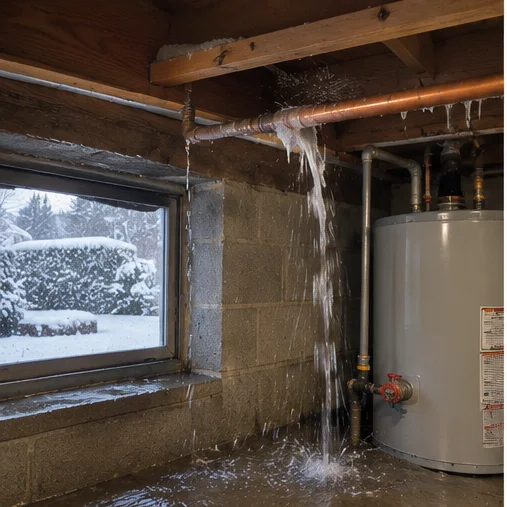
Nothing leaks while the ice holds. When the weather warms and the plug melts, water sprays inside the wall cavity through the split.
Other ways they fail
A bib that is not mounted with a slight downward tilt cannot drain, so some water sits in the barrel. A cracked or worn valve washer lets water into the barrel even when the bib looks shut. Old bibs that are not frost-free at all, with a short stem, freeze quickly in a cold snap.
Insulated covers over the outside of the bib help, but they do not substitute for removing the hose.
How to check yours in spring
Turn the bib on with nothing attached and look at the stream. A weak or sideways spray, or a drip behind the spout, points to a split. Go inside and look at the wall behind it and the ceiling below for a stain or damp insulation.
Check the water meter with all fixtures off. If it moves, water is going somewhere, and a hidden bib leak is a candidate.
What to do if you find a split
Shut off the supply to the bib at the interior valve, or at the main if there is no valve. Have a plumber replace the bib. If the wall is wet, call a restoration crew to open and dry the cavity before it is closed up. Wet insulation and sheathing stay damp for a long time and invite mold.
What a plumber will do
A plumber will shut off the supply, cut out the damaged bib and install a new one. They should mount it with a slight downward tilt so it drains. Some plumbers add a shutoff valve inside the house so you can close and drain the line each fall.
If the pipe inside the wall split, the plumber may need to open a section of drywall or sheathing to reach it. Ask them to leave the opening small and to tell you what they saw in the cavity.
Drying the wall afterward
A split inside a wall soaks the insulation and the back of the drywall. If it is not dried, the cavity stays damp for weeks and mold can start. We open the cavity, remove wet insulation and set drying equipment, then meter the framing until it reads dry.
Only then should the wall be closed and painted. If you close it first, the moisture is trapped and the problem comes back in a few months.
Keep photos of the split pipe and the wet cavity. They help with an insurance claim and with any conversation about whether the damage was sudden or gradual.
A simple habit that prevents the problem
Make hose removal part of the same chore as putting away the patio furniture. Pick a date, such as the first weekend of November, and put it on the calendar. Pull every hose, drain it and coil it in the garage.
If you use a hose for winter tasks, such as filling a bucket, drain and disconnect it after each use. A few seconds of effort protects the wall behind the bib.
If your bib has no interior shutoff, ask a plumber about adding one. It is a small job, and it lets you drain the line completely each fall.
Signs of a hidden split in the fall
Turn the bib on at the start of the season with nothing attached and watch the spray. Go into the basement and look at the wall near the bib. A dark stain on the ceiling below or a damp patch on the sheathing means water has been moving.
If the first spring check shows a leak, shut the supply and call a plumber right away. A split that runs for a few weeks can soak a whole wall cavity, and the damage grows with every day the bib stays on.
Keep reading
The fall checklist includes pulling every hose, so see how to keep pipes from freezing in an Ashburn home. Use it if you find a split while the water is running, so see what to do in the first hour after a pipe bursts.
Quick answers
WinterDo I still need to remove the hose on a frost-free bib?
Yes. A hose left attached traps water in the barrel and defeats the frost-free design.
WinterHow can I tell if a hose bib is frost-free?
It has a long barrel behind the spout, often visible from inside the basement as a long pipe running back to a valve.
InsuranceIs hose bib damage covered?
Sudden bursts may be covered. General information only. Check your policy.
Hose bib dripping inside the wall? Shut the valve and call.
Call (571) 760-4517